CONSTELLATIONS
THE PRACTICE (Artist Focus)
An inside look at an artist’s work, processes, and current ideas. It looks beyond the press release to explore where their work is heading and what is driving them in the studio today.
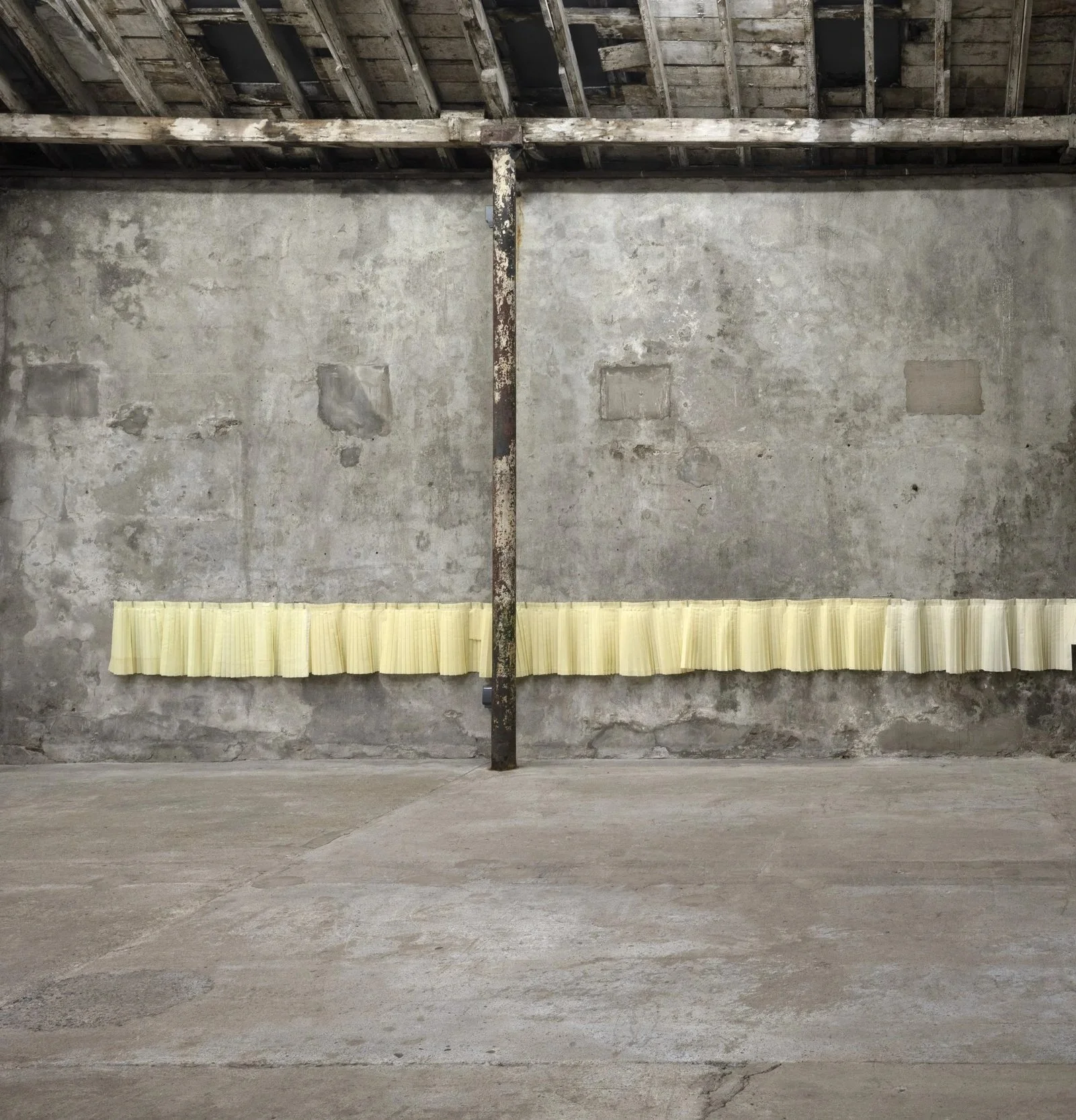
a separate self, 2023
installation view from the group show Fly Floor at The Complex, Dublin, Ireland
materials: assorted yellow cotton bedsheets, polyester interfacing, thread, dressmakers’ pins, metal curtain hooks, stainless steel curtain wire, 500 x 50 cm
Photo: Jan McCullough
Rather than constructing an environment, Isabel English sets up a series of quiet, low-frequency disturbances. Taking an unyielding nineteenth-century anatomical manual and filtering it through paper, thermal air currents, and literary fragments, she strips away clinical certainty. What remains is a delicate, translucent residue: forms that seem perpetually on the verge of withholding whatever truth they are meant to hold. –MARTHA
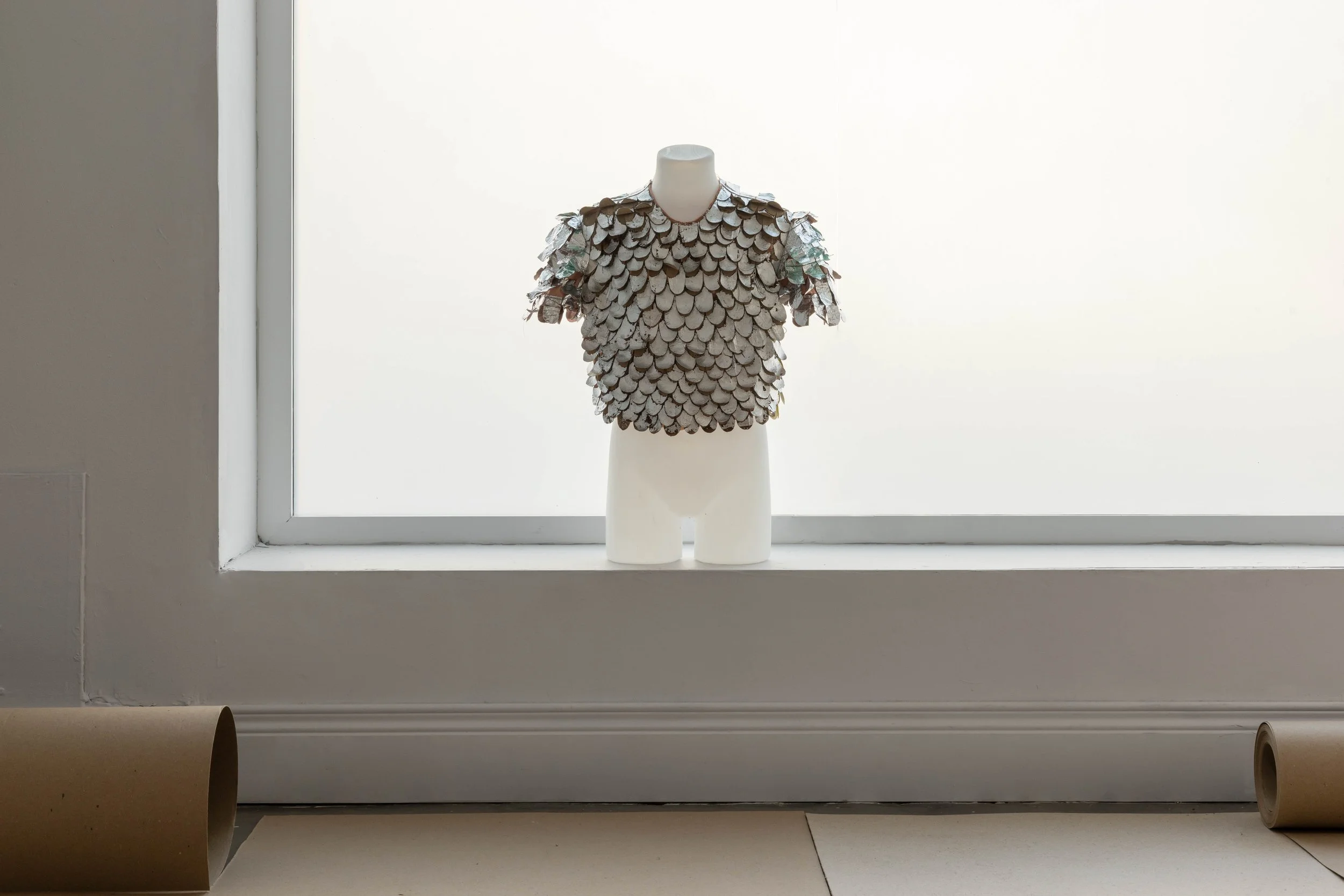
detail view of first-person, 2025
GOMA, Waterford
materials: polyethylene child mannequin, tan leather suede jacket, cotton bedsheet, emergency foil blanket, silver leaf, thread, variable
Photo: Kate Bowe O’Brien
The Architecture of Concealment: Isabel English
I approach my artistic practice as a site of autofiction, borrowing from the literary genre that fuses autobiography with fiction to create a text that can be deemed neither wholly truthful nor dishonest. In autofiction, the author shields themselves from true representation. This shield, a kind of representational gauze or armour, becomes a layer upon which intimacies and vulnerabilities can be tried, but never proven true or false.
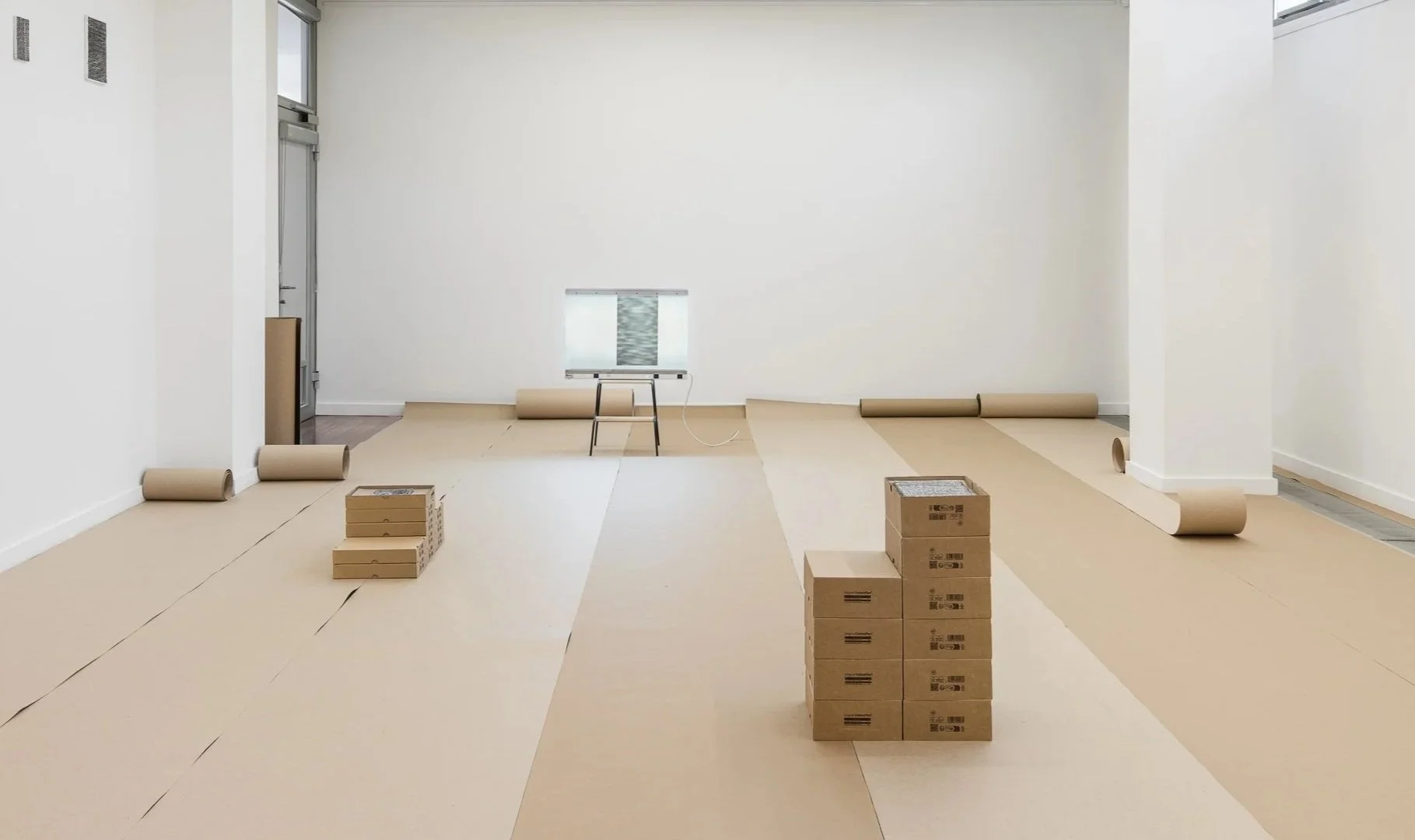
installation view of first-person, 2025
LHQ Gallery at Cork County Library
materials: x-ray illuminator, acetate, digital print on transparent vinyl, footstool, hard-surface floor protector, cardboard boxes, disposable aluminium plating, double sided tape, variable
Photo: Jed Niezgoda
This refuge is where my practice exists. Combining sculpture, photography and textiles, I create site-sensitive installations in which the processes of psychology overlap with those of making. Meticulous, often repetitive gestures transform familiar, everyday materials into objects that occupy an uncertain territory between the domestic and the clinical.
Detail view of differentiation/hatching, 2026
from Sometimes Words at Carthage Hall, Lismore Castle Arts
materials: kozo paper, thread, sewing pins, 50 x 500 cm
Photo: Jed Niezgoda
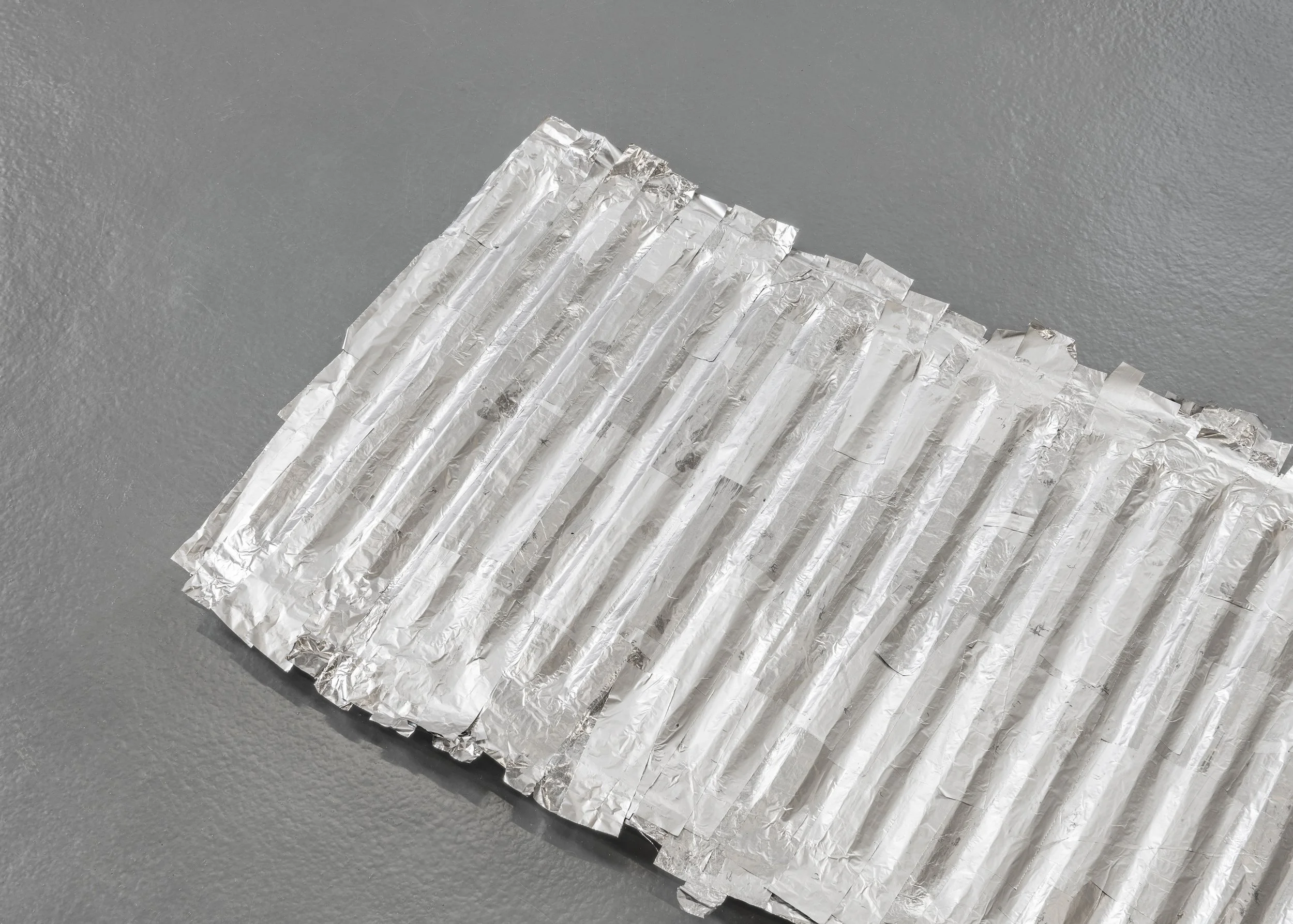
Working with materials sourced from daily life, I construct new forms through acts of alteration and concealment. I lay tinfoil over a mould of newspaper, flour and water, itself shaped from the surface of a radiator. I slice aluminium serving platters into strips and join them with double-sided sellotape, creating an accordion of folds with dimensions akin to honeycomb cardboard, a protective layer used in the shipping and transportation of goods. I cut scales from a beige suede jacket and fuse their surfaces with materials such as faux silver leaf and a foil emergency blanket, forming a garment that hangs from a child-sized polypropylene mannequin. I gather old bed sheets of pastel yellow cotton and fuse them with interfacing to create a rigid set of pleats, hung at waist height from a steel curtain wire.
Through gestures of covering, layering and armouring, I explore the tensions between concealment and exposure. The work occupies an in-between space, where the tangible meets the intimate, and forms of human experience remain protected just beyond the limits of language.
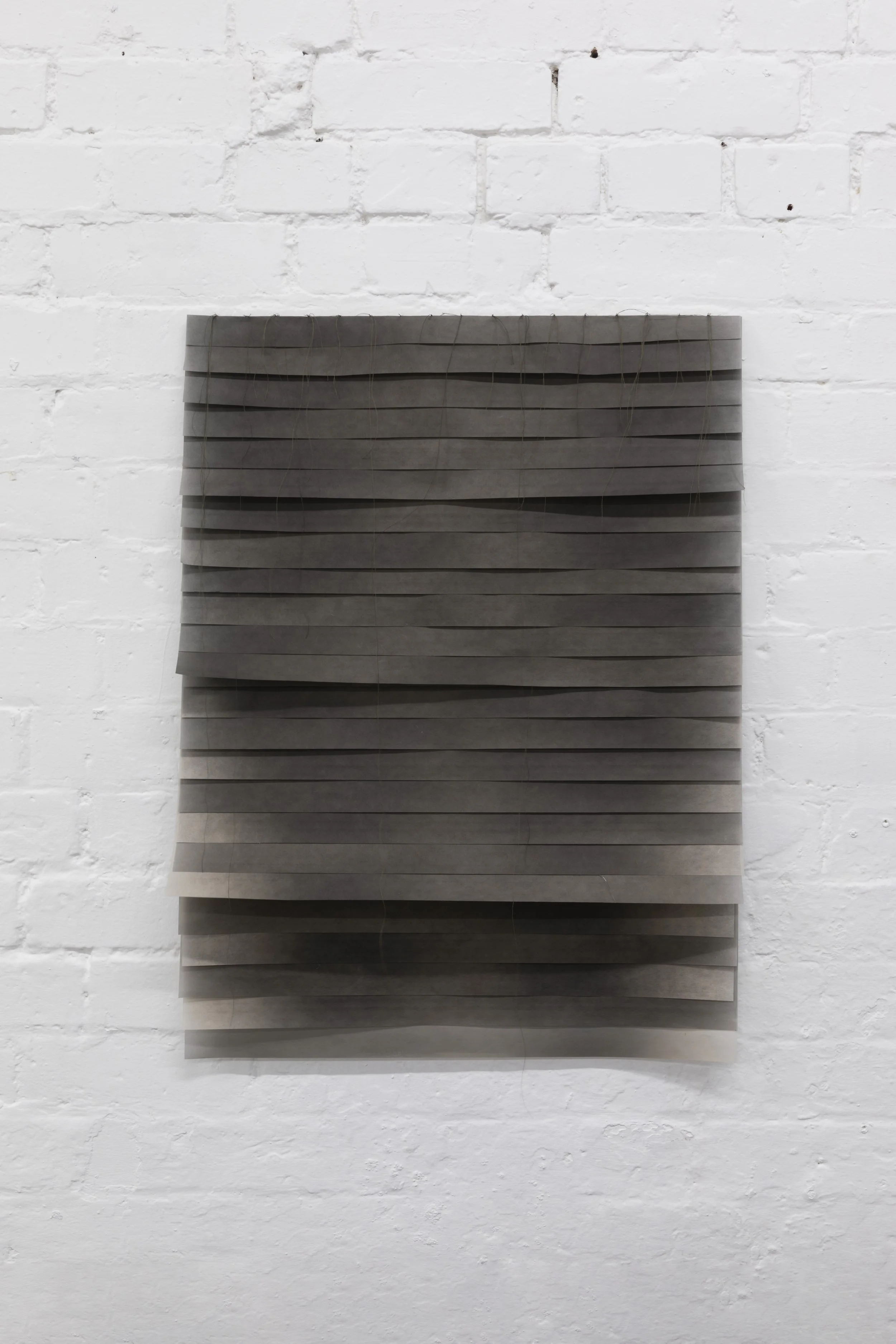
View of murmur, 2026
Studio 1, Temple Bar Gallery + Studios
materials: kozo paper, thread, sewing pins, each piece measures 50 x 81 cm
“These objects trace a repeated image of the torso and ribcage, redacted and obscured, from J.C.L. Sparkes' A Manual of Artistic Anatomy (1888), where it appears as Plate XXX – Trunk, Front View, Middle Layer.”
My latest series, (sigh) and murmur, shown concurrently at Lismore Castle Arts and Studio 1 Temple Bar Gallery + Studios, binds layers of delicate paper with thread and sewing pins along the spine. These objects trace a repeated image of the torso and ribcage, redacted and obscured, from J.C.L. Sparkes' A Manual of Artistic Anatomy (1888), where it appears as Plate XXX – Trunk, Front View, Middle Layer.
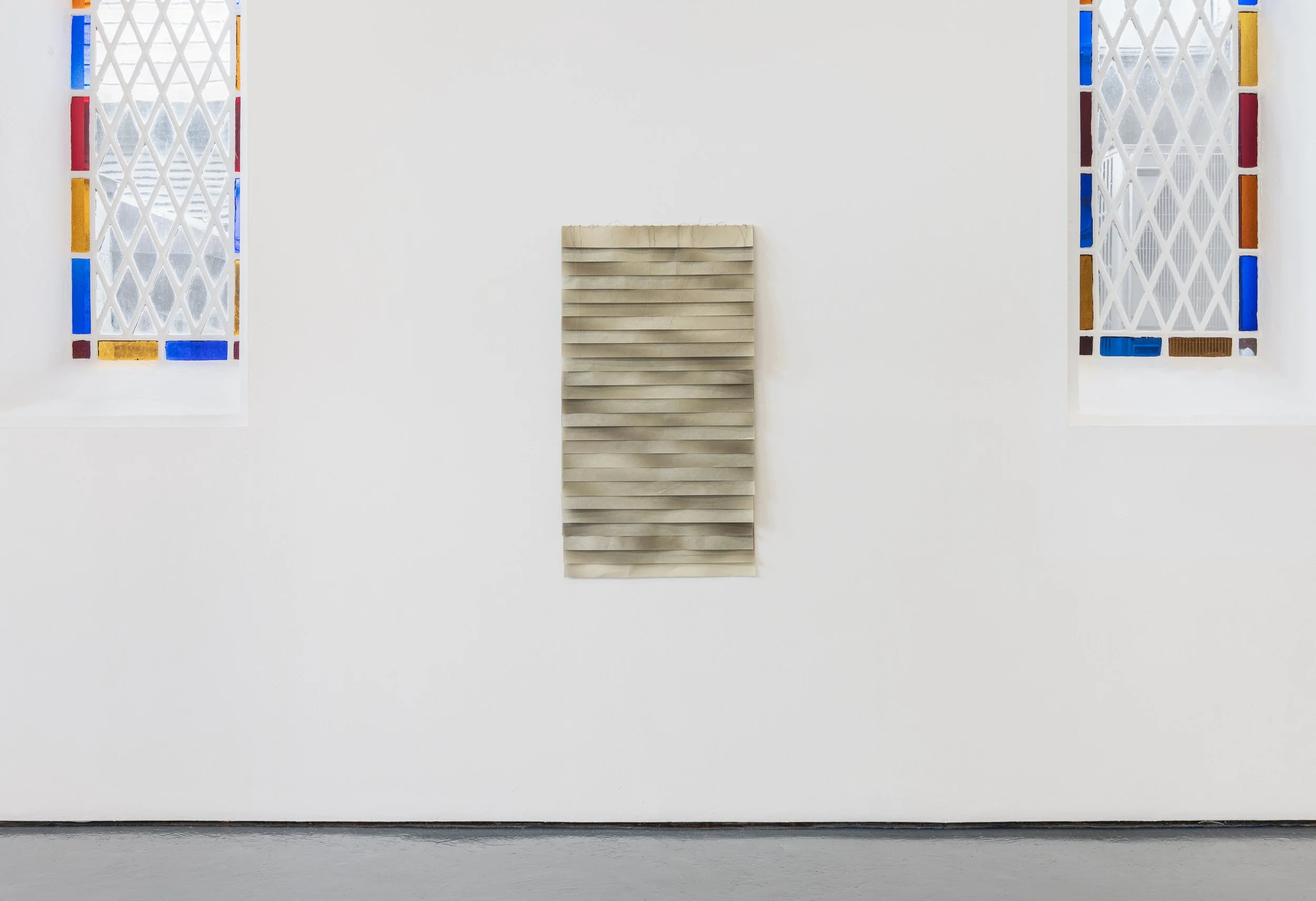
Installation view of (sigh) 2026
from Sometimes Words at Carthage Hall, Lismore Castle Arts
materials: kozo paper, thread, sewing pins, 50 x 100 cm
Photo: Jed Niezgoda
Hung at shoulder height, the works cling to the periphery of the space and are activated by currents of warmth and drafts of air. The forms seem to withhold as much as they reveal, suspended in a state of quiet indeterminacy, where meaning remains provisional and the boundaries between interior and exterior begin to dissolve.
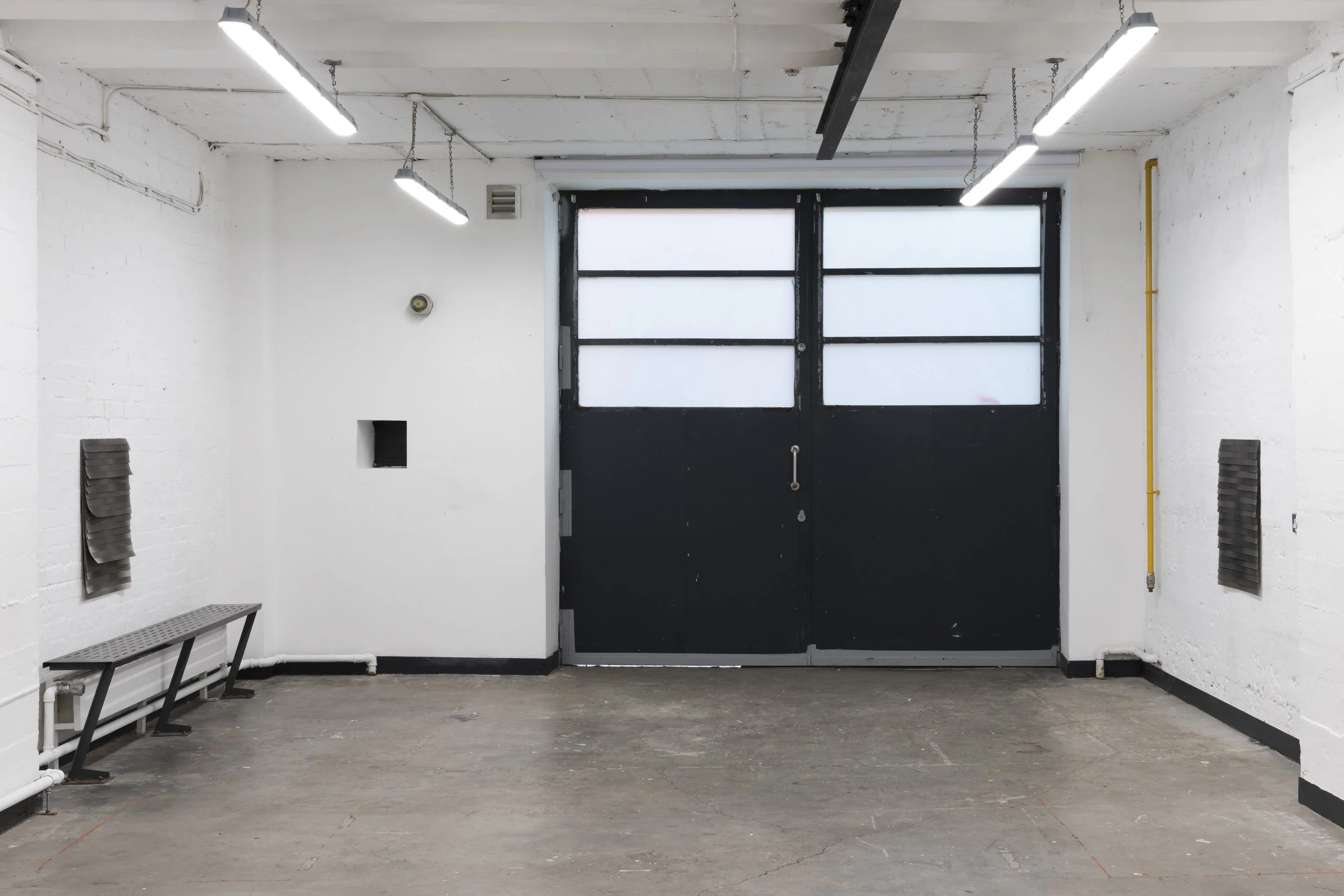
Installation view of murmur, 2026
Studio 1, Temple Bar Gallery + Studios
materials: kozo paper, thread, sewing pins, each piece measures 50 x 81 cm
Isabel English works at the fragile edge where space, anatomy, and memory collapse into material. Across sculpture, paper, photography, and textiles, her practice fixes its gaze on the quiet architecture of the home and the strange, porous boundary separating interior life from exterior exposure.
What makes English’s work compelling is her penchant for structural translation: stripping clinical source material of its rigidity and reassembling it into something infinitely more vulnerable. Splicing 19th-century anatomical manuals and recasting their linear logic into site-responsive, air-activated paper forms, she orchestrates a shift from industrial weight to spatial breath. Aluminum grid structures and high-contrast scans give way to delicate sheets that drift on unseen thermal currents. In her hands, the domestic and clinical collide; forms withhold as much as they reveal, held in a state of suspended indeterminacy where spatial memory is felt rather than declared.
BIO
Photo: Wilhelmina van der Bent
Isabel English
Isabel English lives and works in Ireland. English creates fragile, site-responsive installations, sculptures, and paper works that probe the porous boundaries between interior life, personal memory, and the architecture of the home. Translating clinical source material into vulnerable tactile forms, she investigates the intersection of psychology and physical anatomy—frequently using spliced 19th-century anatomical diagrams alongside literary prose to navigate thresholds of concealment and exposure. In the subtle movement of her materials, the artist evokes spatial memory and psychological interiority, leaving meaning provisional and allowing the clinical and domestic to quietly collide.
English holds a degree in fine art and has developed her practice across sculpture, paper, textiles, and photography. She has presented exhibitions at GOMA, Waterford, Temple Bar Gallery + Studios, Dublin, and Lismore Castle Arts. Her work continues to be featured in key contemporary visual art venues and curated initiatives across Ireland.